Close announcement bar
Alert
Notice
We’re aware of an issue affecting the address finder on some forms. This is linked to a problem with an external service, which may mean you’re unable to complete your report or application at the moment. We’re monitoring the situation closely and will provide updates as soon as possible. Please try again later. We apologise for any inconvenience.

Award winning operation tackles the £3.2m retail crime problem through partnership and prevention
Main article content
A targeted operation in Reading town centre, which has won the Thames Valley Police 2026 Laycock Award, is delivering significant reductions in crime, catching the offenders who drive the problem and reducing the impact on shop staff, businesses and the wider community.
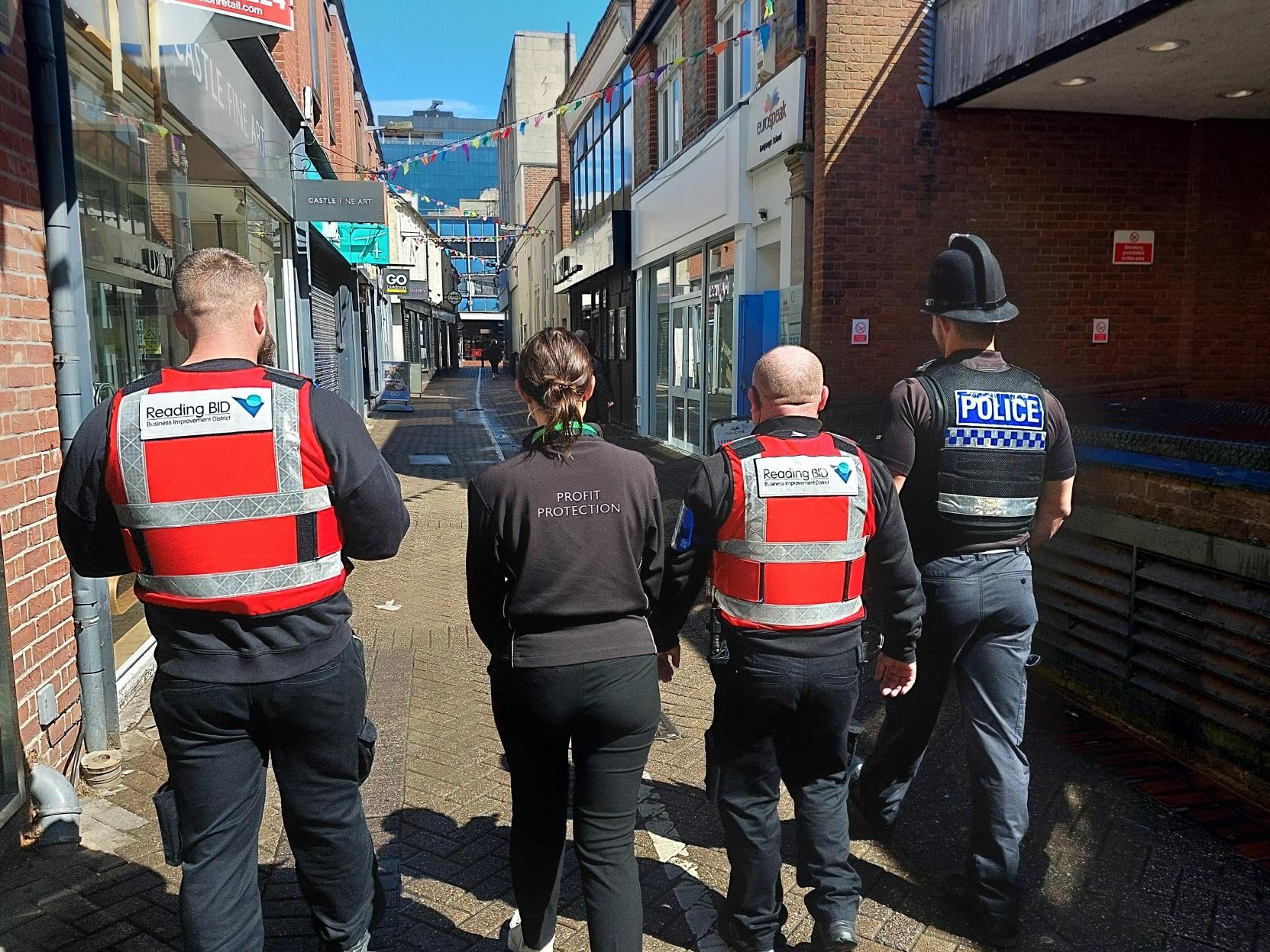
Working with Thames Valley Police problem‑solving analysts and the Reading Business Improvement District (BID), part of REDA, officers surveyed every retailer in the town centre. This provided a far more accurate picture of crime levels, patterns and impacts locally than police data alone.
Retail crime in Reading had reached a critical point, with estimates suggesting more than 55,000 shoplifting incidents in the past year with losses of around £3.2 million. Despite the scale of the issue, only a small number of incidents were being reported to police, masking the true level of harm and frustration felt by retailers.
National and local research suggested that over half of shoplifting offences were linked to individuals stealing to fund a drug dependency. Research also suggests that these offenders were the most likely to be involved in assaults on shop staff when challenged.
Hotspot locations were identified with Reading town centre, along with patterns showing higher levels of offending earlier in the week and later in the day. Alongside prolific offenders, the team also identified opportunistic shoplifters, criminal entrepreneurs and organised crime groups targeting high‑value goods.
Rather than relying on enforcement alone, the NHPT coordinated a four‑strand response, divert, pursue, prevent and protect, alongside partners including Reading Borough Council, Change Grow Live, Oracle and Broad Street Mall security teams, and local retailers.
The most innovative element is the creation of a Business Crime Navigator, funded through the Home Office and embedded within Change Grow Live’s outreach service. This role acts as a bridge between police, businesses and support agencies, directing prolific offenders into rapid access drug and alcohol treatment at the point of arrest or police contact.
Early results are promising. Several individuals have already engaged with treatment. Alongside diversion, officers ran plain‑clothes operations securing arrests, charges and prison sentences. In addition, high‑visibility patrols and “Have Your Say” events at retail hotspots have increased reassurance for staff and the public.
Overall reports of shoplifting have risen, suggesting an improved confidence in reporting and shoplifting offences occurring within the retail focus area were recorded to be 12.5% lower than the wider Reading town centre area.
But it doesn’t stop here, regular performance reviews, retailer feedback and data analysis are being used to track progress and refine tactics to continue to tackle retail crime and keep our communities safe.